

In today’s fast-paced digital economy, the conversation around AI has finally shifted from fear to function. For business professionals, AI is no longer an abstract concept to be wary of, it’s quickly becoming the most indispensable member of your team. From streamlining workflows to unlocking strategic insights at scale, AI is reshaping how we work, lead, and compete.
But here’s the twist: businesses seeing the biggest benefits from AI aren’t just the ones investing in the flashiest tools. They’re the ones learning how to collaborate with AI.
AI as Your Strategic Sidekick
Think of AI less like an employee and more like a strategic advisor that never sleeps. Business professionals are using tools like ChatGPT, Claude, and enterprise-specific copilots to:
● Automate research and market analysis,
● Draft and refine communications or proposals,
● Forecast financial and operational performance with near-instant simulations,
● Translate real-time data into competitive decisions.
This isn’t about replacing people, it’s about amplifying what smart people can do with less time and more precision.

Productivity Is the First Win, But Not the Last
Where most professionals stop at productivity (faster emails, better calendars), the next-level AI thinkers are using these tools for creative decision-making and innovation.
Need to test three go-to-market strategies in one day?
Use AI to model buyer personas, simulate outcomes, and draft tailored messaging.
Trying to break into a new market?
Let AI parse through local consumer behavior, regulatory landscapes, and competitor data.
The secret? Get good at asking better prompts. Prompting is the new coding.
Ethics Isn’t a Checkbox—It’s a Competitive Edge
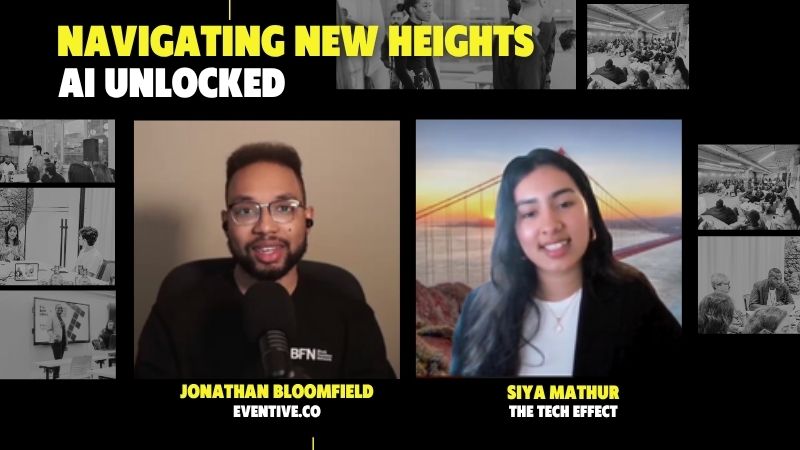
One of the most surprising insights that came out of recent AI leadership discussions, like in the “Navigating New Heights: AI Unlocked” event, is how ethics is becoming a selling point. Customers, investors, and employees increasingly want transparency in how AI is used.
Businesses that can show:
● Ethical data usage,
● Clear accountability structures,
● Inclusive AI training processes,
…are building trust as an asset.
What’s Next: Chief AI Officer or AI-Literate Leader?
Whether your company installs a Chief AI Officer or expects every department head to become AI-literate, the shift is clear: business professionals are expected to not just use AI, but understand it. Not from a technical perspective, but a strategic one.
Questions to ask yourself:
● What business problem am I solving with AI?
● What biases might the AI inherit from my data?
● How do I measure the ROI of AI in my workflow?
Bottom Line
AI won’t replace business professionals. But business professionals who leverage AI thoughtfully, creatively, and ethically will absolutely outperform those who don’t.
So ask yourself—not just how can I use AI, but: How can I co-create with it?